
Plant Therapy
User research, UI design, Interaction design.

Overview
Plant Therapy is an app that connects millennial plant owners and experts to easily and efficiently improve plant care.
Role:
UX Researcher, UI Designer
Team members: Sofia Baig, Xernan Peralta, Erika Reyes, Geri Masseangle and Enrique Santamaría.
Duration
3 weeks during
August-September 2020.
Tools
Figma, Invision, Miro,
Trello, G-suite,
Adobe Illustrator, Procreate.
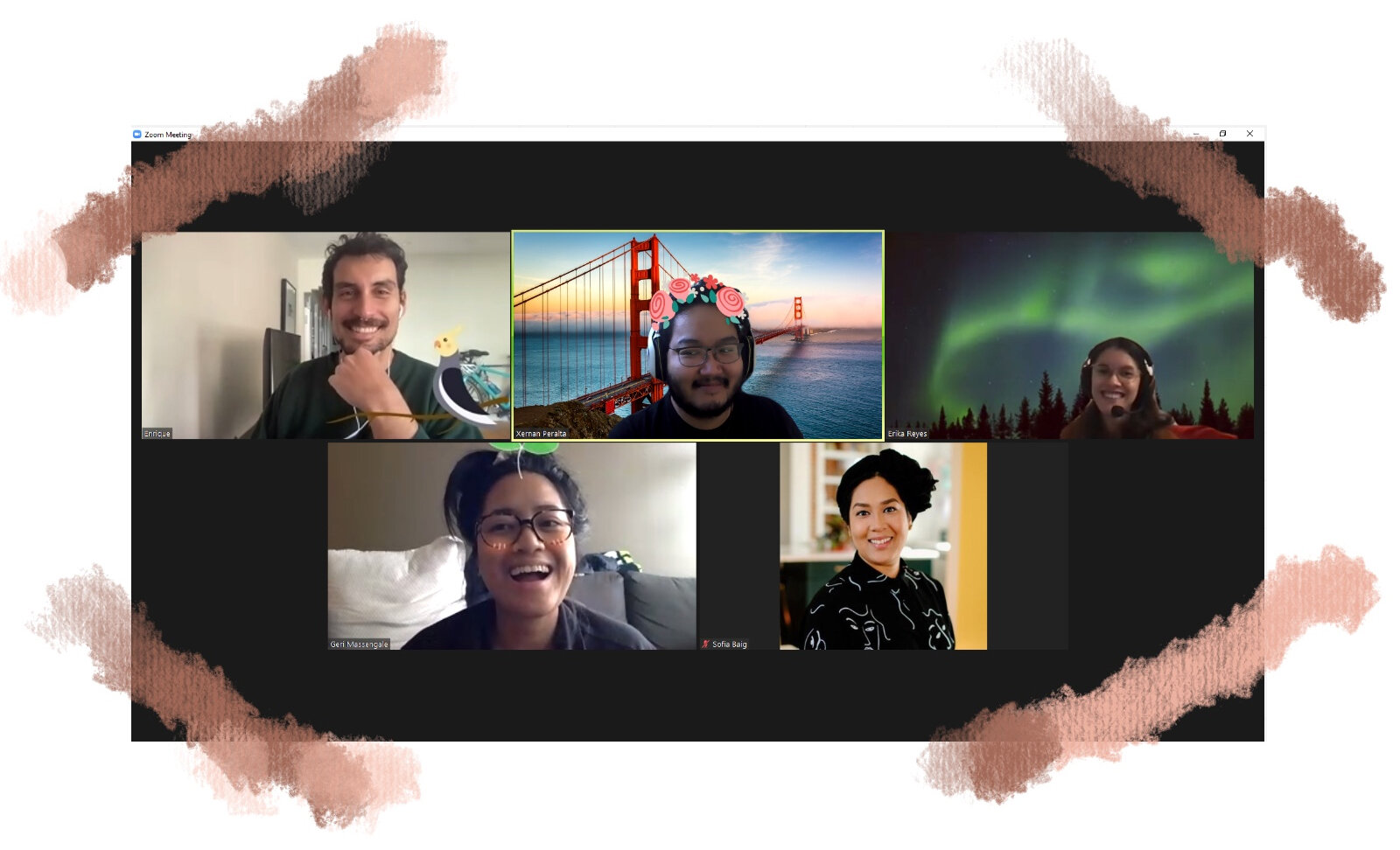
Our team of designers.
The idea
As a group of designers, we were challenged with creating an app concept from scratch, solving a daily user need.
We realized that one of the things that was giving us comfort during COVID-19 were plants, although none of us were very good at taking care of them. After a brainstorm and dot voting exercise, we decided to move forward with an app dedicated to improve plant care for our generation of plant owners.
Background
Buying plants has become a trend. Concepts like “plant daddy” have appeared in the last years and even more during the pandemic while Instagram has thousands of “plant lover” profiles.
If we look at the data, the boom is real: the National Gardening Association reported a 30% growth in plant sales in 2019 up to 1.7B in revenue in the US. This boom is attributed mostly to Millenials and the new interior design trends.
But, do all these new buyers know how to take care of their plants? Do they succeed at it? Or are we living a massive plant annihilation? Time to find out.
Research
How do new plant owners feel and what do they need?
The starting point was creating a proto persona: a young millennial plant novice, that has found this to be his new passion but he’s not very good at it.
I created a user research plan that included a survey and interviews. We conducted the survey with 103 participants via Google Forms. The goal was to guage millennial's interest in plants and to find out how skilled they are at taking care of them.
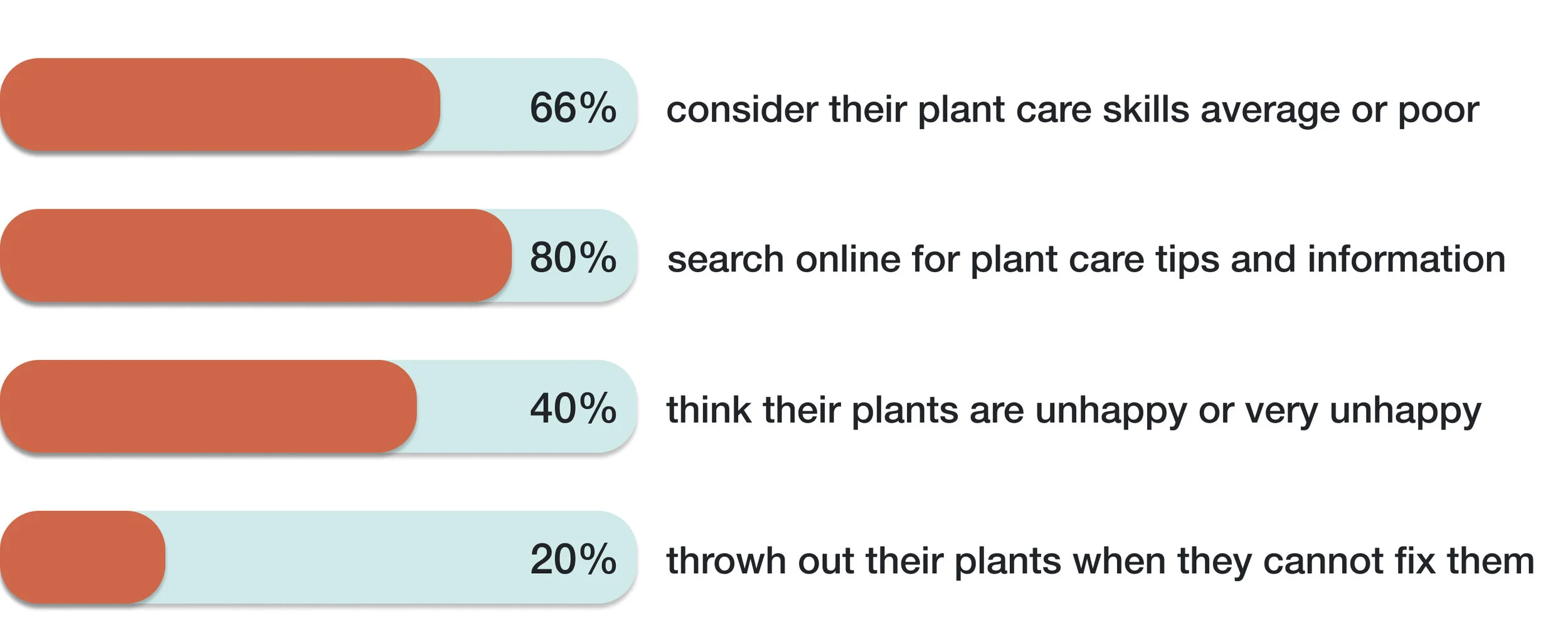
Main survey results
After we identified that there was a struggle for over 60% of the owners, we dove deeper with 9 user interviews, I conducted two of them. We interviewed millennials and generation Z users that, according to the National Plants Association, are the ones that are buying new plants the most. We also picked a variety of owners, from people owning 100 plants, to average owners who typically own 10-15 plants.
During the interviews we focused on the relationships with plants, feelings about them, buying habits, care plans, skills, and use of plant care apps.
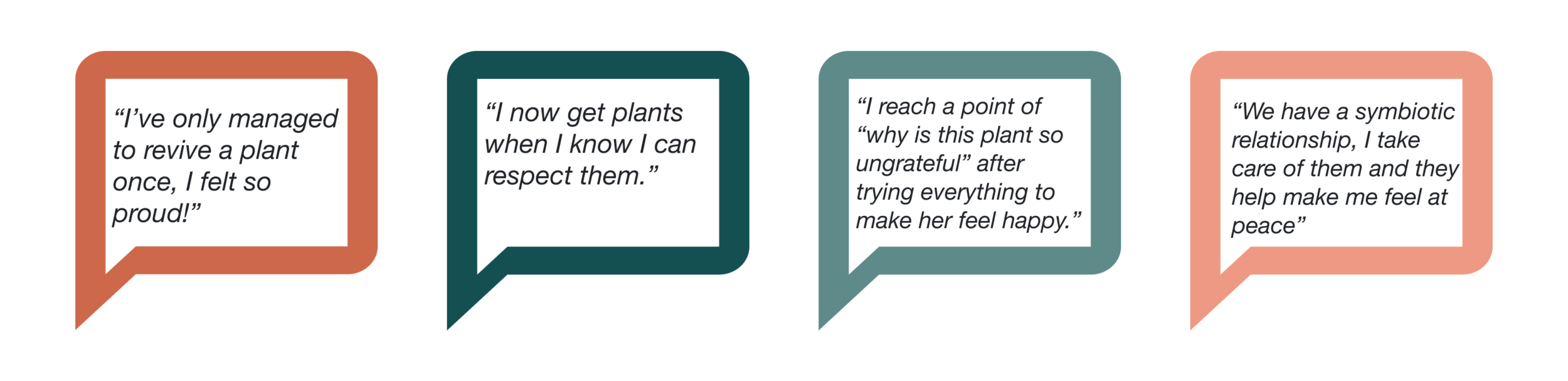
Quotes from four of our interviewees .
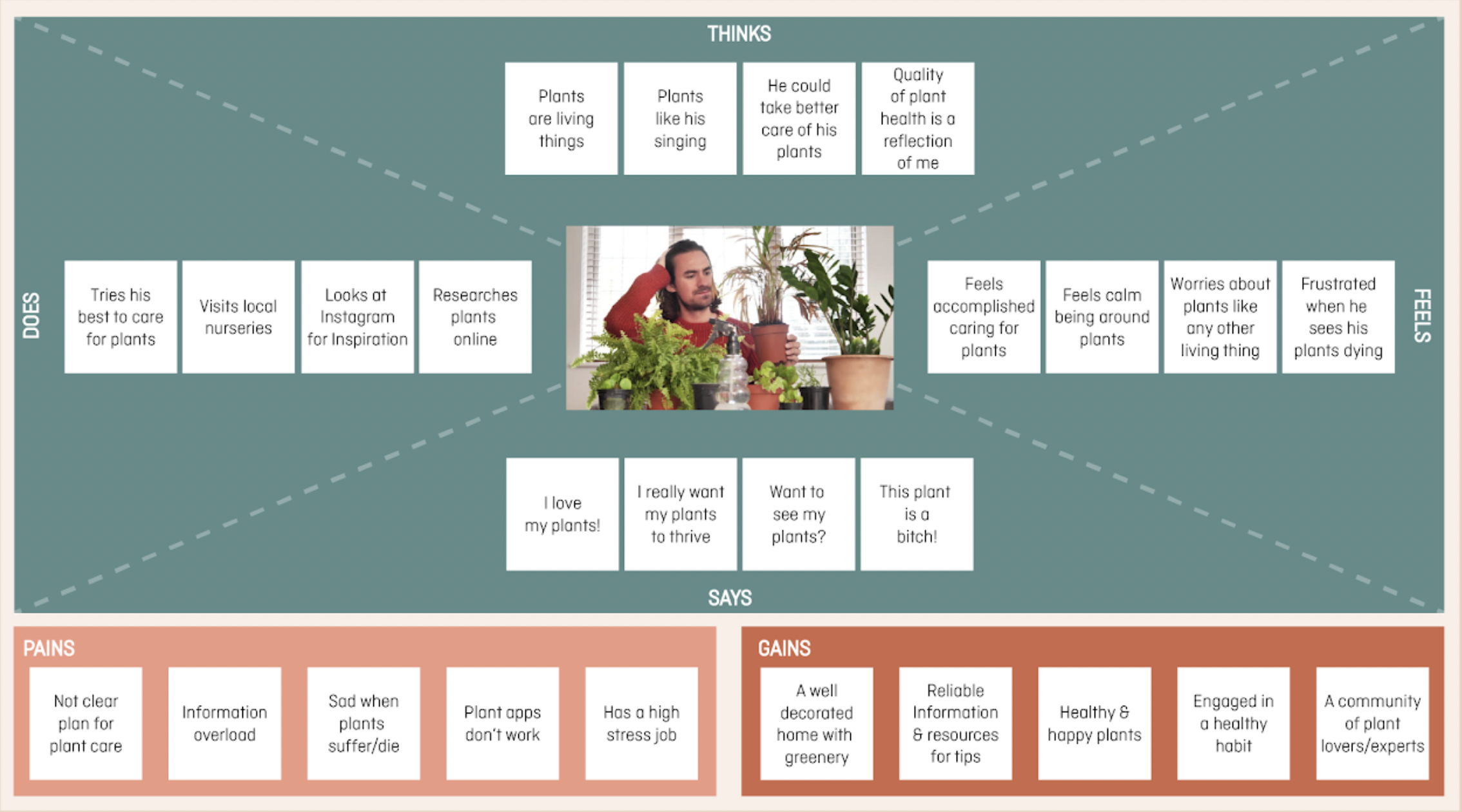
Empathy map.
Main insights
After the interviews and mapping the user feelings and needs, we identified the main insights:
People seem to get into plant collecting without having much knowledge of plant care but enjoy gaining more knowledge.
Users speak about their plants as if they were pets, and they get hooked on buying more and more plants. Creating that relationship with each plant is perhaps addicting?
Plant owners feel accomplished when their plants are thriving and sad when they begin to wither.
People search online for plant care tips but they are frustrated with the current plant care apps not being reliable and packed with ads.
User Persona
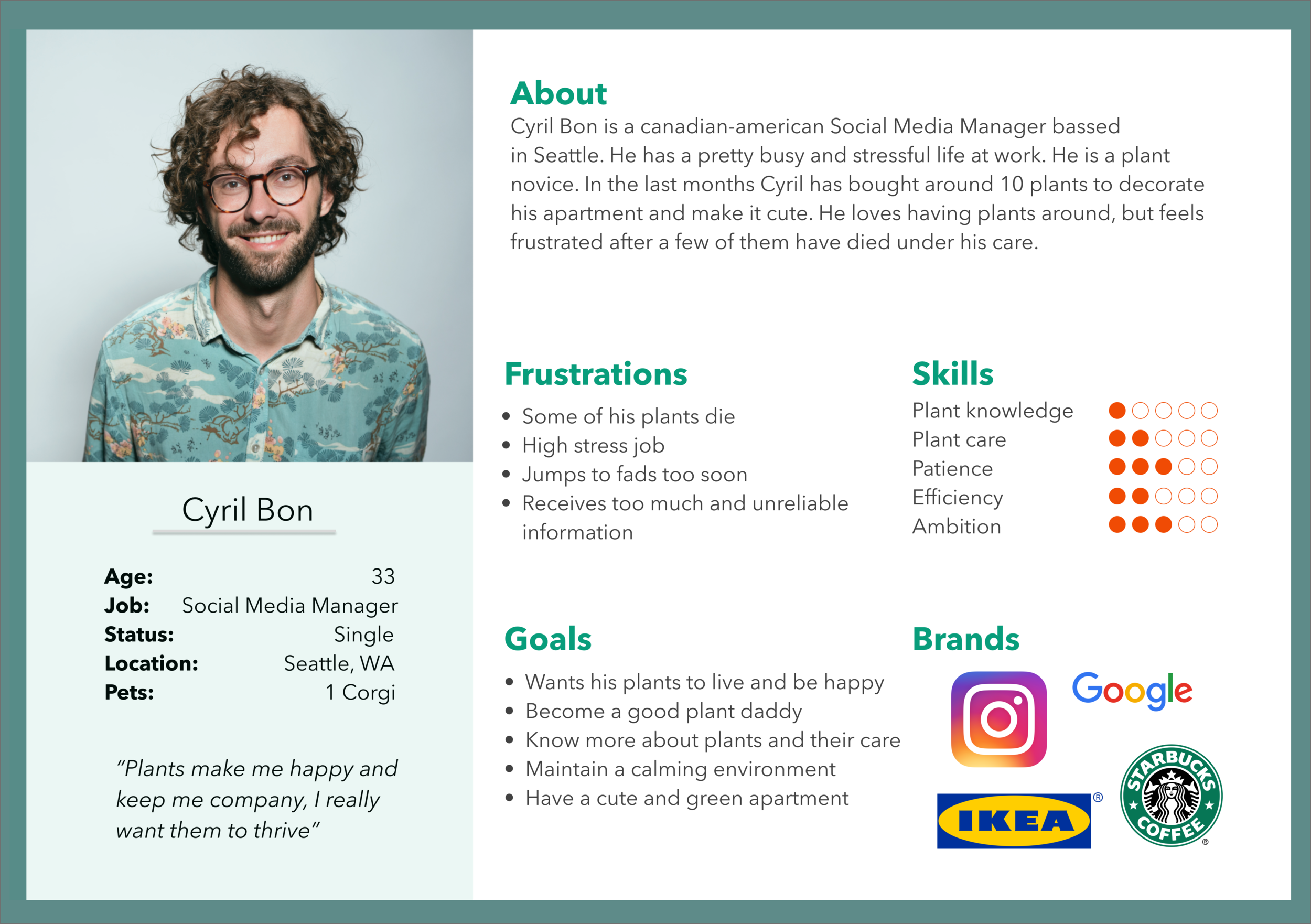
Our user is Cyril, a Canadian-American Social Media Manager based in Seattle. He’s a busy young professional and plant novice that needs to figure out how to properly care for his plants so that he can have a beautiful home with thriving greenery.

The problem
After our research, we have realized that Cyril and other plant owners tend to feel sad and frustrated when their plants become unhealthy. In many cases they feel as though their efforts are wasted when their plants start to die. Many of them lack the resources, time, and knowledge to take proper care of their plants and need help.
As a group of designers, we believe we can help plant owners, who have trouble keeping all their plants healthy, with a dependable resource to help them maintain a home filled with thriving greenery.
Ideating the solution
What kind of help do plant owners need?
As a group, we performed a brainstorm of solutions with an “I Like/I Wish/What If” exercise. The ideas with the most votes and success were related to helping plant owners through a network of plant experts and doctors, not too different from medical or pet-care solutions. We created the figure of plant doctors that would help users with expert care for a flat rate in the app. This was also supported by the research, where we observed that plants were very much like pets to the users, with a big emotional tie.
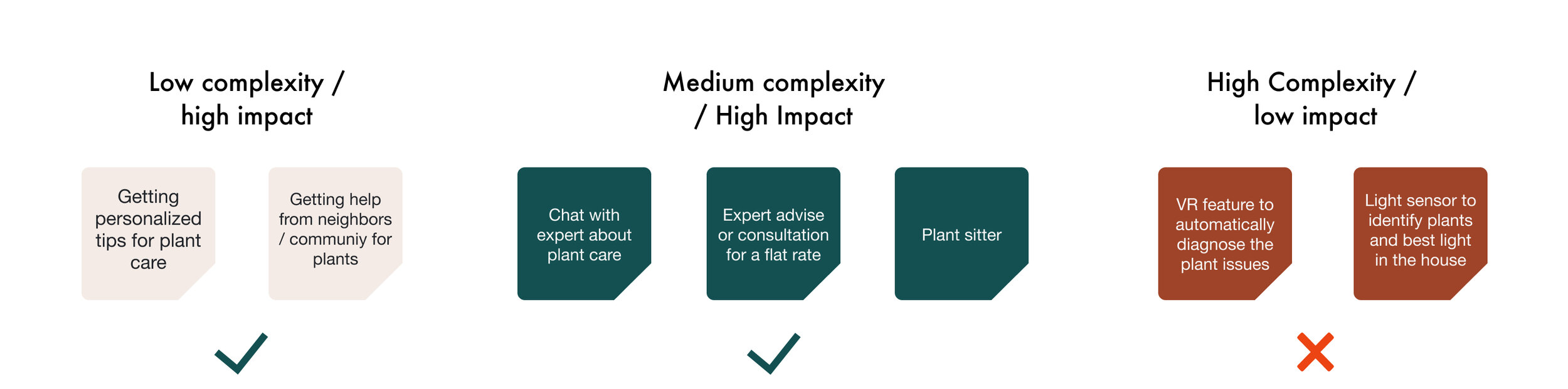
Prioritization of ideas.
Value proposition
Plant Therapy is a resource that connects you to a community of plant guardians and experts that will help your plants thrive.
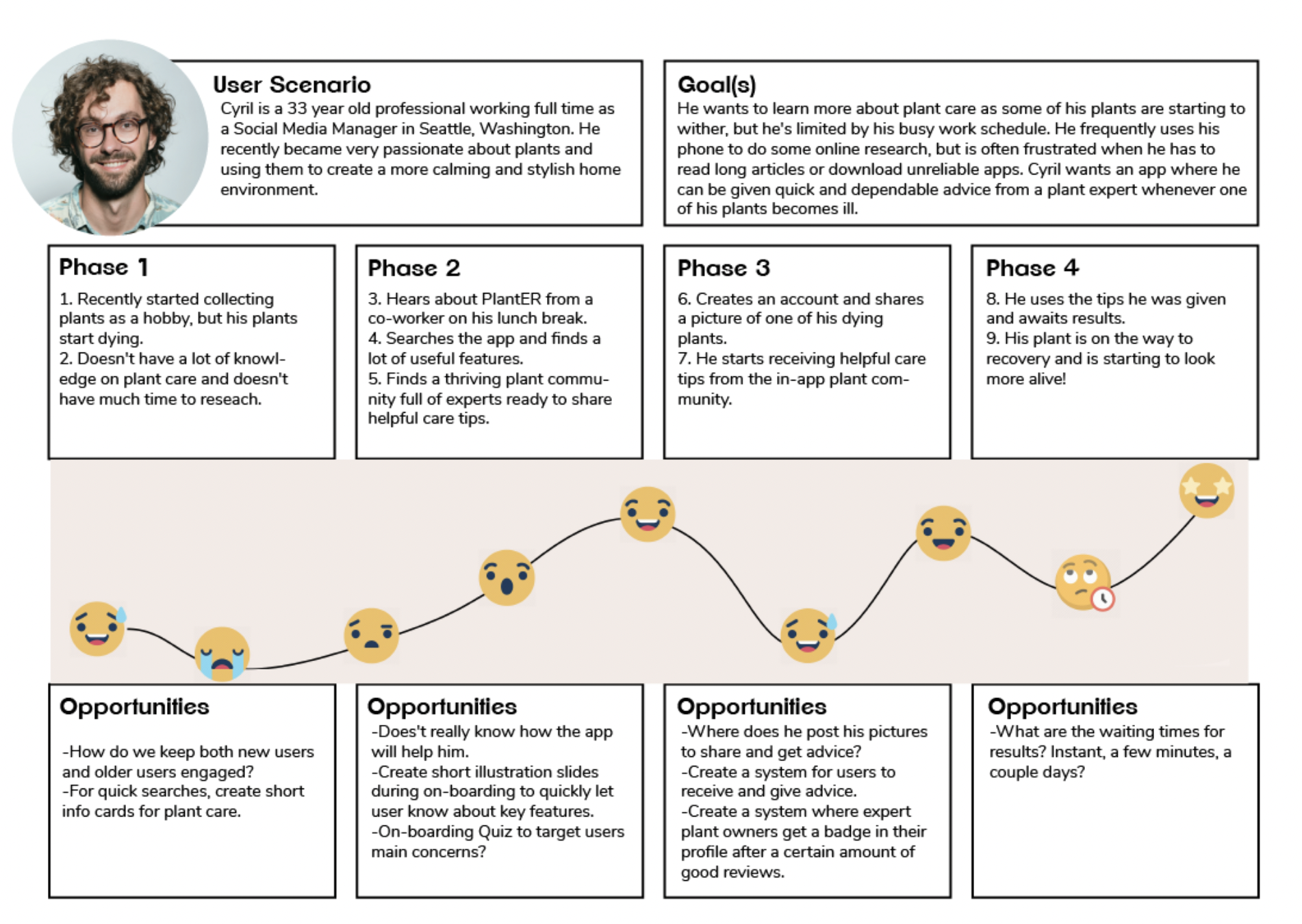
User journey map.
When Cyril found Plant Therapy
Our user has bought many plants during the pandemic to add some green to his house. He is struggling with taking care of them and some are starting to die. He’s frustrated and sad not only because he’s wasting money on plants he can’t take care of, but also because he feels for them.
He gets recommended Plant Therapy and starts to get in touch with plant doctors and advisers. He starts receiving good tips and instructions to improve his plants health. His house starts looking greener and greener and his “plant-babies” resurrect. Cyril is happy and quite proud of himself.
Prototyping
Conceptualizing Plant Therapy
During the prototyping part I focused on the video-chat with a doctor flow. The below screens belong to this flow.
This user task starts at the doctor icon on the home screen. After clicking the user can choose between scheduling an appointment with a plant doctor, a video-chat consultation, or going into a live chat. After selecting video-chat they will see some of the conditions for the call and click on “request”. The user has a live video-call with one plant doctor where he can show the plant and its issues, and receive tips and instructions for that plant. After the call, the user will be able to rate the experience both in terms of technical quality and advice quality.
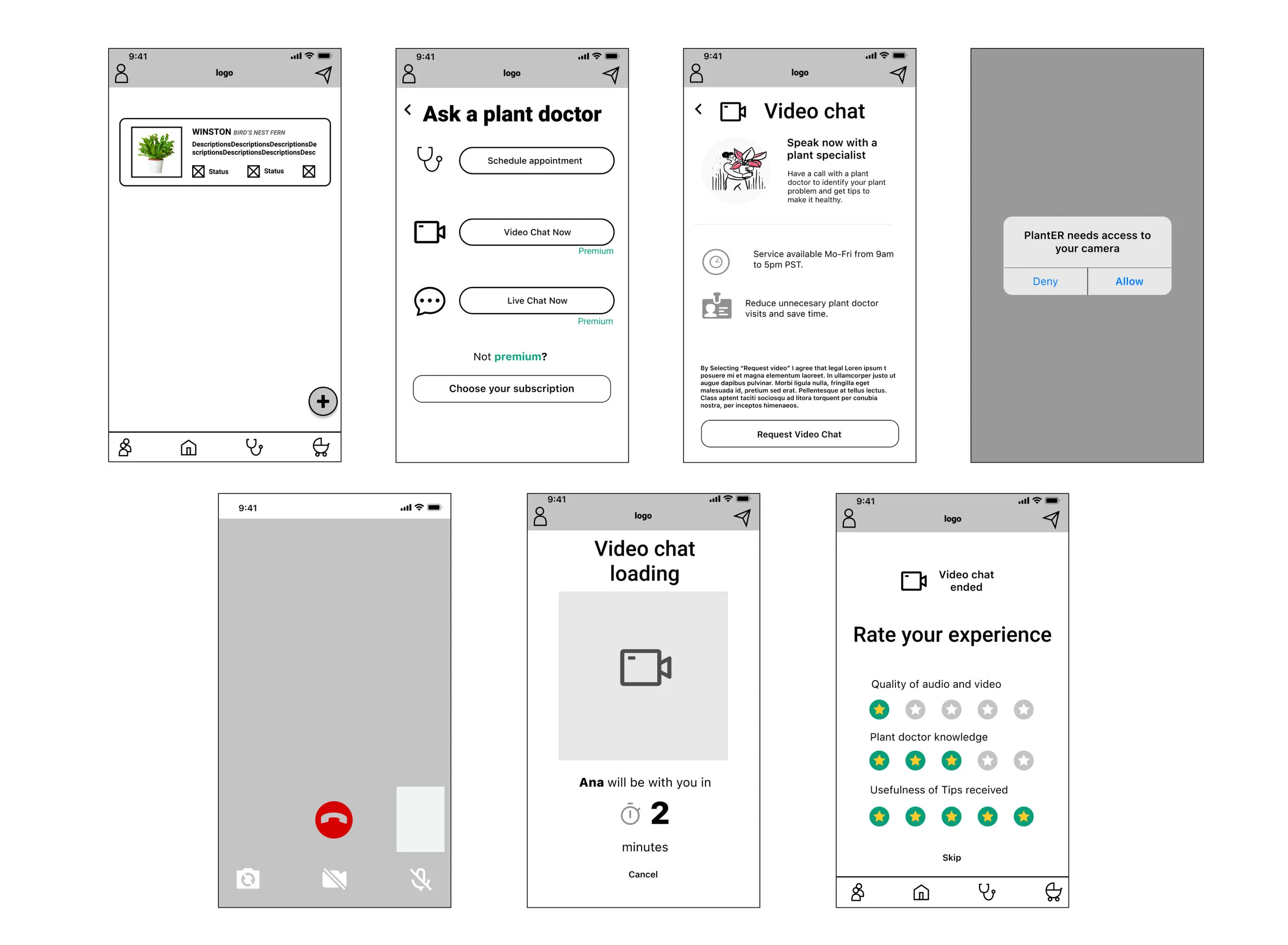
Lo-fi prototypes

Testing Plant Therapy
We conducted usability testing on the lo-fi prototype with five users, I conducted two of them.
Our goal was to understand if they found the app useful, were able to navigate through it easily, and achieve the following main tasks:
Request and conduct a video-chat with a plant doctor
Go through onboarding and register an account.
Book a plant doctor appointment.
Book a plant sitter.
Join the community and ask a question.
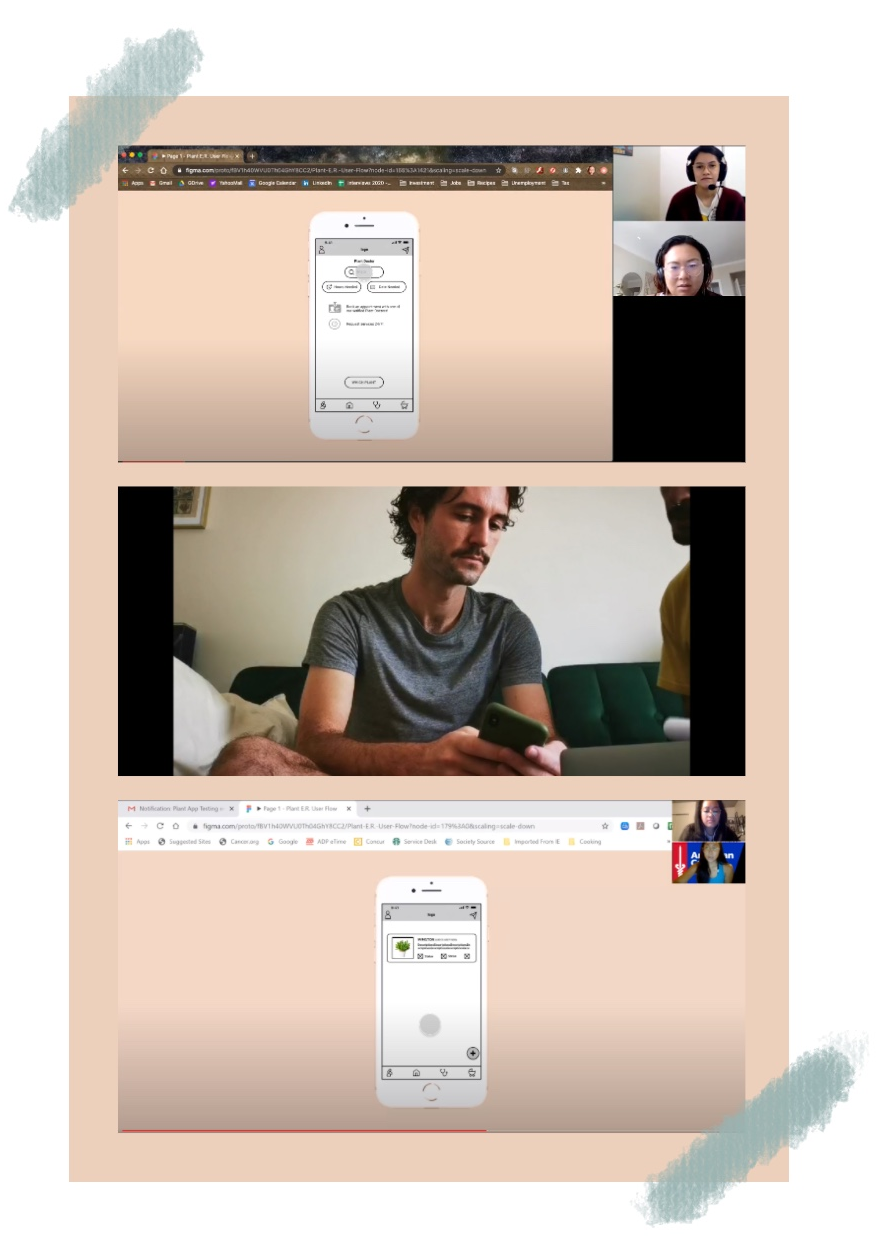
Feedback and iteration
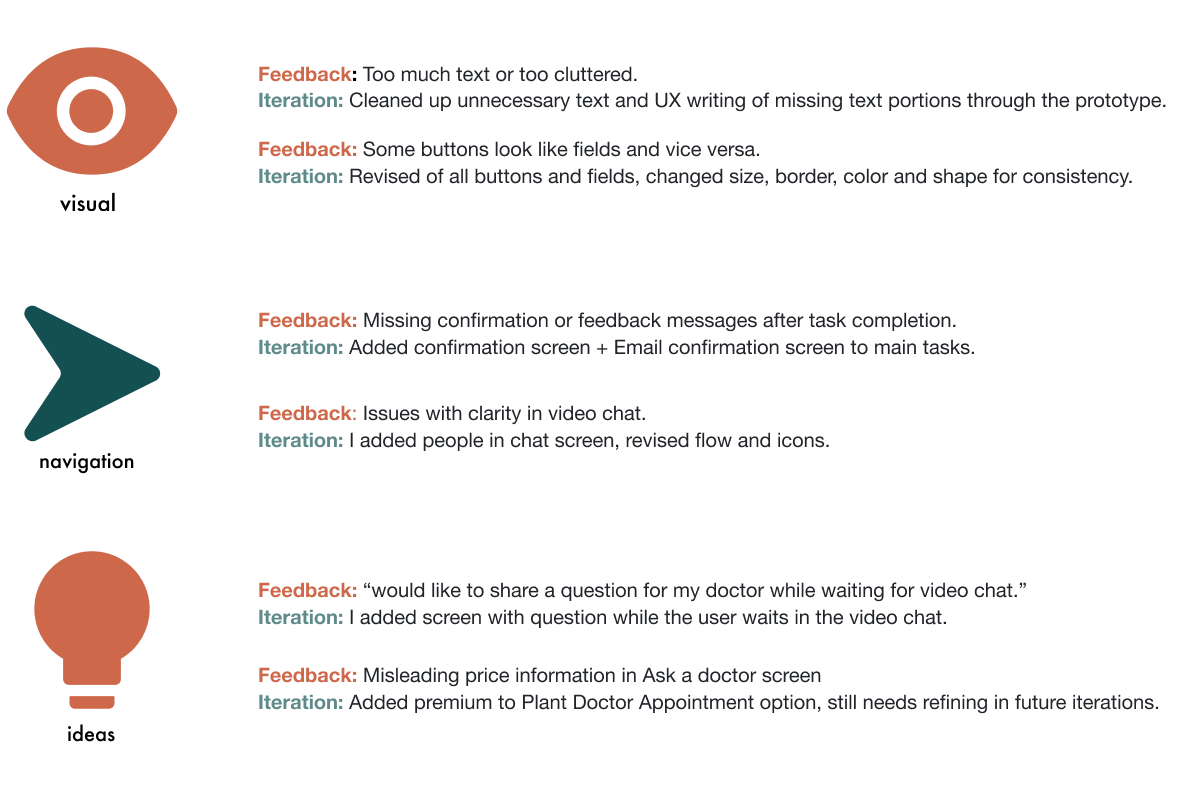
Although all users succeeded in the five tasks, we received many ideas for improvements from their feedback. We iterated the user flow and made over 21 changes to address visual and navigation issues.
We also iterated the user flow following their feedback, to reflect a more organic navigation along the app. Some highlights from the feedback and the iterations:
Final prototype
We applied the improvements to the mid-fi prototype. The screens below belong to the video-chat flow in the prototype and were done by me in Figma.
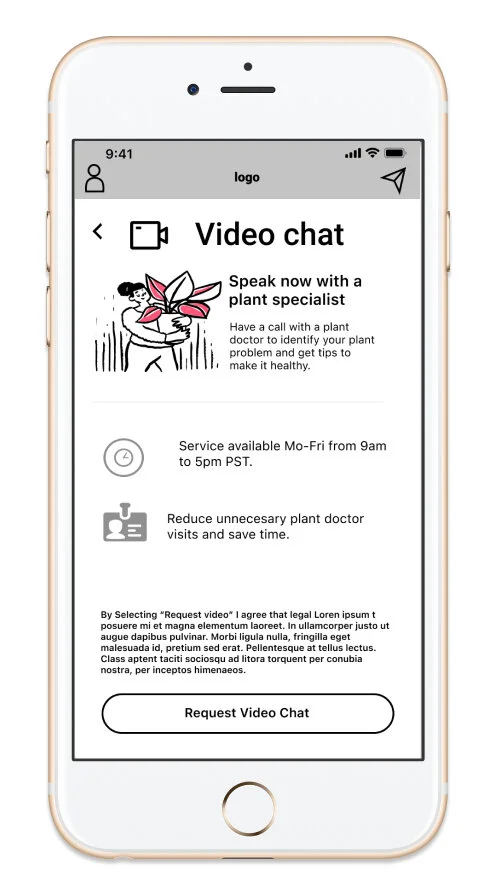
Video-chat
The user gets information about the
video-chat conditions, availability,
and terms and conditions.
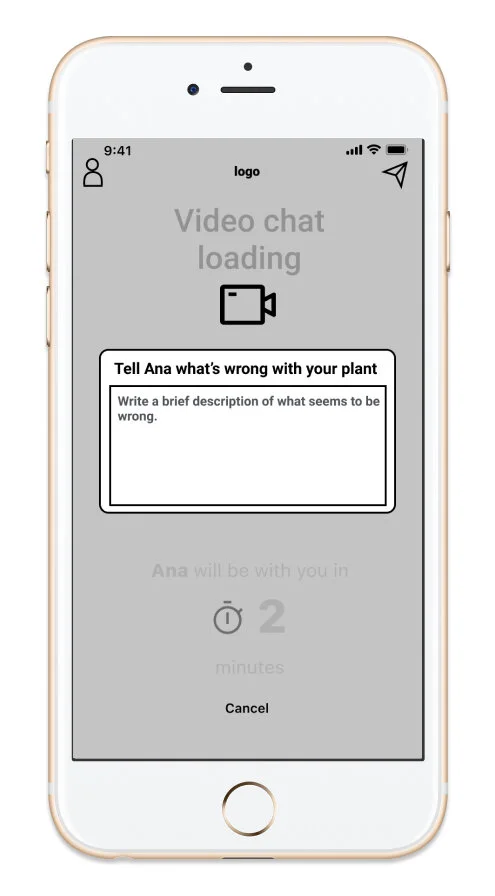
What’s wrong?
I added a screen where the user can briefly explain what’s wrong with the plant, requested by the users.
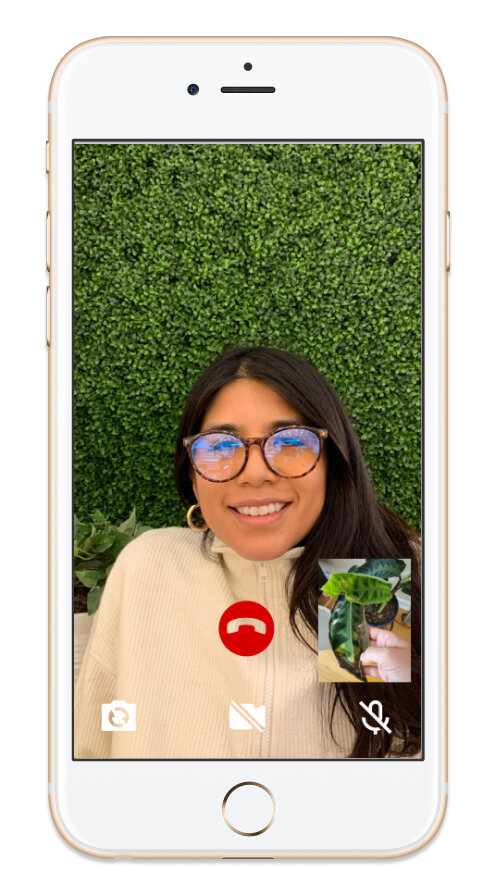
Video chat
In the live video-consultation
the user receives advice
and tips from a plant specialist.
What’s next?
Build up high-fi prototypes for the main features.
Develop the plant doctor expert network/nanny idea, which is quite unexplored and makes a good business case.
Plants and pets aren’t so different, many users treat their plants like family. The connection between users and plants being living things can be further explored through UX writing and new iterations or ideas.
Revise and refine our subscription/payment models. Users were willing to pay a small amount to have a serious and fast plant care team in their hands.
What I learned, thoughts on the project
With Plant Therapy, I believe we tried to address too many features in one app. We could have tried to strip it down and focus on one or two, probably the plant doctor/expert option, and iterate on that. Mixing community, sitter, doctor, seem to be many options for the user and it’s hard to deliver in all of them.
I’ve learned that plants are very dear to users, and many ideas can come from our research. I’d be happy to explore other ideation roads for this project.